High demand for crypto amid Russian invasion

Finance and Coffee
4 years ago · 3 min read
(Words by Alexa Tran)
At the onset of Russia’s invasion of Ukraine last week, bitcoin dropped below USD $35,000 and Ethereum fell below $2,400 due to uncertainty.
But as economic sanctions are getting more severe in Russia, its national currency Ruble plunged to record low and interest rates climbed up to 20%, many Russian investors are moving their money into crypto to hedge against the crumbling Ruble.
In the last 7 days, there has been a massive surge in transactions between cryptocurrencies and the Russian Ruble. Bitcoin (BTC) price has surged 13% and is now sitting at over USD $42,000. Ethereum (ETH) was trading up 13% at over $2800. At the same time, people are switching to stablecoin Tether (USDT). Stablecoins maintain a steady value that allows investors to protect their funds and savings at all times.
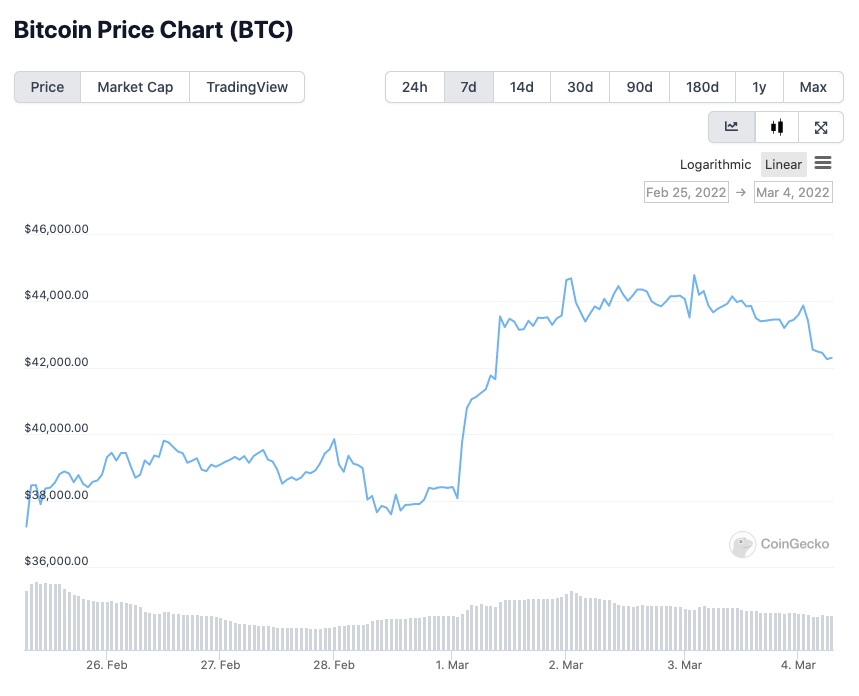
This shows that people are seeing crypto as their safe haven amid a crisis like this (of course, not everyone is supporting crypto but the trend is growing).
How useful are cryptocurrencies for people in crisis?
Let’s be clear: Blockchain and cryptocurrencies are just the technology – one designed to be neutral so it's not for or against any crisis. There will always be good and bad people using technology for its own use.
Because of how things are currently (heavy sanctions against Russia, Russian banks being out of SWIFT, their currency tanked), some Russians will use crypto to bypass sanctions and protect their money.
This is what the blockchain and its decentralised nature are designed to do. No one can control it or use it to manipulate the situation like sanctions, whether it's for good or bad.
The Ukrainian government has also accepted crypto donations towards the war and the eventual recovery efforts. On their official Twitter account, the Ukrainian government announced they would be collecting crypto in BTC, ETH, and USDT via their Ethereum wallet addresses.
Can the Western leaders put a limit on crypto exchanges in Russia?
What the West might do is request a centralised exchange to block Russian user accounts. That will only limit the options to *on-off ramp to fiat but won’t stop any transaction happening on the decentralised exchange or someone sending someone money using crypto.
*On-ramping is when you leave the traditional monetary system and enter into a decentralised, blockchain ecosystem. Conversely, off-ramping is when you cash out of crypto, converting your coins or tokens into fiat money.
People are suffering
With all the fighting and sanctions, the ordinary Russians and Ukrainians are the ones suffering the most. </
